Tuesday, 6 December 2011

Prisoner of War Camp at Koo-Wee-Rup

The Koo-Wee-Wee Rup Swamp Historical Society has copies of Commonwealth Government documents relating to the World War Two Italian Prisoner of War Camp at Koo-Wee-Rup or Bayles - the documents use both names to describe the location of the Camp. The Society has had a few enquiries about this Camp, mostly relating to the names of prisoners, however no names are included in the documents and as you might expect from a War bureaucracy much of the material relates to administration and officialdom. The Society does not have any photographs of the Camp, though would be keen to see some.

The Prisoner of War Camp was located on 7¼ acres on part of Lots 6 & 7, Section S Parish of Koo-Wee-Rup, which is the south side of the Main Drain Road, between Backhouses Road and Ballarto Road. There is a small sketch map with the documents, which is reproduced below on a copy of a Koo-Wee-Rup Parish Plan. The Commonwealth took possession of the land on August 7, 1944. The entire block of land (consisting of Parts, 6, 7 & 8) was just over 58 acres and was owned by the Estate of Ardolph Edward Mosig and Frederick Leonard Smith who were leasing it to Leslie Einsiedel. The land was being used for grazing and was described as “Flat Swamp land All cleared” There were no buildings on the block but there was a dam, which would be used by the Camp and so a trough was provided for Mr Einsiedel’s cattle. Mr Einsiedel was to get just over £10 per annum for the land.


The Camp was scheduled to open October 21, 1944. There would be one officer and ten ‘other ranks’ and 88 POWs, including one who was a medical orderly. The camp would consist of ‘P’ type huts from the Rowville Camp, and there was a one ton van and two 30cwt trucks to transport prisoners to and from work. The Prisoners were employed by the Department of Commerce and Agriculture and they were paid 1/3d per day, plus they were provided with all equipment, blankets, clothing, food etc. The prisoners came from the Murchison Camp and had a medical and dental before they were ‘allotted’ to local farmers to provide labour. Local contractors would provide perishable foodstuffs and appropriate arrangements were made with the local church authorities for the spiritual welfare of prisoners. Most other arrangements e.g. financial appear to have been carried out at Murchison.

The next lot of material we have comes from February 1946 when the camp was being dismantled; the hire of land was terminated on February 22, 1946. There is a list of buildings that were sold which gives us some idea as to what the Camp would have looked like. All buildings were made of CGI, which I assume is corrugated galvanised iron, though some were made from, at the time, the popular asbestos cement.
Buildings No.1, No. 2, and No. 3 all described as Sleeping Huts and all were 60 feet 8 inches by 18 feet 8 inches in size. They were sold to Melbourne University for £370.00.
Building No.4 - Kitchen and Mess 93 ft 4 inches by 18 feet 8 inches – sold to Toora R.S.L for £250.00.
Building No.5 - Kitchen, Mess, Recreation and Sleeping – 78 feet 8 inches by 18 feet 8 inches – sold to the Athlone Presbyterian Church for £210.00.
Buildings 8 & 9 - Latrines, each 12 feet by 12 feet. Sold to Frankston Fire Brigade for £51.00.
Building No.12 - Kitchen Store ,60 feet 8 inches by 18 feet 8 inches, and the Drying Room, 23 feet 4 inches by 18 feet. Sold to Loreto Convent, Toorak for £175.00
Mess and a Provision Hut - 57 feet by 18 feet, sold for £144.00 through Melgaard & Co.

It appears that all buildings were removed by April 1947 and the army then paid the owners just over £53.00 for damage, removal of concrete foundations etc.

So that’s what we know from the official documents. I asked my father, Frank Rouse, a few years ago if he knew anything about the Camp (he would have been eleven at the time) and he also spoke to two other local identities, Bill Giles and Ian Clark. Bill and Ian agree there was no strong security at the Camp and there was no security at weekends, but the prisoners had to wear orange overalls. Bill remembers seeing prisoners walking along the road at night when he was riding his bike home, and they could walk along the drain bank into Koo-Wee-Rup and to the Bay.

The POWs worked at selected farms including the AJC Asparagus farm (also known as Roxburghs) at Vervale. This was on the south side of Fallon Road, from Dessent Road, through to Simpson Road. Dad remembers truckloads of the prisoners driving down Dessent Road to the AJC farm in the morning, one guard on each truck. At lunch time a food van with a portable cooker would go the farm to feed them. Another truck load of prisoners would go to Dalmore.

Bill said they also worked on the Kinsella Brothers farm (Dan, Norman and Arthur) that grew a lot of potatoes and asparagus during the War. The Kinsellas were on the north side of the Main Drain, around Eight Mile Road. Dad said his brother Jim (who would have been thirteen at the time) remembers three Italian POWs digging potatoes with forks on the Rouse farm (Joe & Eva Rouse). Jim also remembered, as did Bill and Ian, that the prisoners had their own especially printed money and coins, but we are unsure how this was used.

So, that’s all the information we have, if you know anything else, then I would love to hear from you.

Thursday, 17 November 2011

Hallam

Shown here are four photographs of Hallam. For information about the history of Hallam, click here.

This is Stoopman Motors - located on the south side of the Princes Highway and on the Dandenong side of the Hallam Hotel. The photograph is undated, but it may be from the late 1950s - perhaps someone can identify the cars.

These two photographs, above and below, are of Frawley Road. The tennis courts are shown above. They were taken 1977 or 1978.


This is Spring Square in Hallam - the photograph was undated, but it may be the same time as the two above - mid to late 1970s.

Wednesday, 26 October 2011

Pakenham Cemetery tour

The Narre Warren and District Family History Group conducted a tour of the Pakenham Cemetery on Sunday, October 30 2011. It looked at the graves of some of the local pioneer families including the Bourkes, the Dores, the Aherns, the Mulcahys - they all have roads named after them. We also looked at the grave of Mary Frawley, the source of Frawley Road in Hallam. Another grave we visited was that of James and Susannah Thewlis - the source of Thewlis Road which leads to the cemetery.

The site for the Pakenham Cemetery was gazetted on February 13, 1865 and the first Trustees were appointed on May 8 the same year.

From the Victorian Government Gazette, February 21, 1865 p. 459

The original Trustees were John Startup, Richard Fortune, Michael Bourke, Thomas Mulcahy and George Ritchie. They are all buried at the cemetery, apart from Richard Fortune. Richard's wife Jane is buried at Pakenham.

From the Victorian Government Gazette, May 23, 1865 p. 1158

John Startup leased the Mt Ararat run of 17,000 acres (6,800 hectares) which covered the area from Pakenham to Drouin. He later purchased 336 acres (135 hectares) on the corner of Mt Ararat Road and Bald Hills Road. Michael and Kitty Bourke established the Latrobe Inn on what is now the Princes Highway, near Toomuc Creek, around 1850. Michael Bourke also acted as the Post Master for nearly 30 years. Kitty Bourke kept the Hotel and Post Office from the time of her husband’s death in 1877 until 1910. The Latrobe Inn was a Cobb & Co. coach stop and for obvious reasons was later known as Bourke’s Hotel. George Ritchie was the owner of the farm Bald Hill, based around Ryan Road and McDonald's Drain Road, and south of the railway line. George Ritchie’s sister Jane was married to Richard Fortune, another Trustee. Richard died in 1868 leaving Jane with seven young children. Jane continued to farm at Nar Nar Goon and died in 1900. Thomas Mulcahy was a Pakenham landowner

Photo credits: The Pakenham Cemetery photographs were taken by Lynne Bradley.

Monday, 17 October 2011

Better Farming Train comes to Casey Cardinia

The Better Farming Train was established in 1924 by the Victorian Railways and the Departments of Agriculture, Education and Public Health. The train travelled around Victoria, stopping for a day at various country railway stations, and provided lectures and demonstrations to farmers to improve farming techniques and therefore raise agriculture production. If agriculture production was raised then the Railways would also benefit as nearly all produce was moved by rail. The train made 39 tours of country Victoria between 1924 and 1935 and stopped at over 390 towns. Over 250,000 people attended these lectures.

The train consisted of around 15 carriages and once the train arrived at the Station the various displays were set up. Each carriage contained information and exhibits about different areas of agriculture such as potatoes, dairy, bee keeping, poultry. The train actually carried livestock, cattle and pigs, enabling a hands-on approach to the subject. There was also a pasture carriage, which had various plant varieties growing. The train had expert lecturers in each subject to provide information and demonstrate new techniques.


Dr. A. E. V. Richardson, Sup't. of Agriculture (Delivering Inaugural Address on "Better Farming" Train at Bunyip).  Victorian Railways photographer.
State Library of Victoria Image H31183/4

The inaugural stop was at Bunyip, where it arrived at 9.20am on Monday October 13, 1924. It was met by the Berwick Shire President, Cr J. Dore and other members of the Council. Also present was the Prime Minister, Mr Stanley Melbourne Bruce, and the Railways Commissioner, Mr Harold Clapp. The Argus reports that they (the Prime Minister and Mr Clapp) were delighted with the success of the experiment. One thousand people inspected the train that afternoon and listened to the following lectures - Horse Breeding Act, Examination of stallions; Jersey and Red poll cattle; Friesian and Ayrshire cattle; Grading cows; Pigs; Herd testing; Milk grading; Grasses and top dressing; Feeding cattle; Bees and honey; Feeding pigs and Potatoes. For the women, there were demonstrations in needlework and lectures on mothercraft and child welfare. In the evening, Amalgamated Wireless Limited had a set attached to the train and district residents had the opportunity of hearing Dame Nellie Melba in Grand Opera.

The train was at Pakenham on Friday, October 21 1927. The Pakenham Gazette of October 28 reported that the dairyman and grazier found much to interest them in the prize sheep and cattle, the fodder, samples of wool, models of helpful devices, specimens of disease affected organs and tissues and suggested remedies, and the stock demonstrations. There were also lectures on calf rearing, pig breeding, potato culture, and for the orchardists a lecture on fruit culture. Once again the women were entertained by cookery demonstrations, needle work, home nursing lectures amongst other activities. The Gazette ended the report by saying the visit of the train was a success and much benefit should be derived from it.

The Better Farming Train was at Koo-Wee-Rup on November 15, 1927. This was reported in The Argus newspaper. The main topics of agriculture discussed were potato growing and dairying. As the article pointed out, the Koo-Wee-Rup region produced one fifth of Victoria’s total potato production with Carmen being the principal variety grown with yields of five tons to the acre. The potato lectures covered seed selection, storage, cultivation, manure application and disease control. The other focus of the visit was dairying and The Argus reported that 600 cans of milk were sent daily from Koo-Wee-Rup.


Better Farming Train, the Potato Section. Victorian Railways Photographer.
State Library of Victoria Image H28737/5

At Koo-Wee-Rup, over 100 women attended the Better Farming Train demonstration on cookery and needlework, clothing design and an infant welfare nurse was also available to examine babies In fact, so popular was this service that the ‘womens section’ or ‘domestic section’ of the train toured separately from the rest of the train from as early as 1925 and had also visited Koo-Wee-Rup on February 8, 1926.

Other visits to the Casey Cardinia region included - Lang Lang on November 10 1924 on way to South Gippsland and Cranbourne on Saturday 15 November 1924 on the return journey. It went to Berwick on Friday July 3 1930 and the train stopped at Clyde on Tuesday 21 July 1930 and the next day at Yannathan. There may well have been other visits to our region, I was going through reports on the train in The Argus trying to pick up any mentions of the tours, and that reminded me just how extensive the Rail network was in the 1920s and 1930s and so how many small towns could have been visited by the train. There is a great website with maps that show the rise and fall of the Victorian Railways http://www.vrhistory.com/VRMaps/

This is an interesting aspect of our history and reflects the importance of the railway in people’s life at a time when most people didn’t have a car and, until the 1960s, nearly all the farming produce (milk, potatoes other vegetables, cattle) from the area was dispatched by train to market.


Better Farming Train, a lecture on Child Welfare. Victorian Railways Photographer.
State Library of Victoria Image H28737/18

Wednesday, 5 October 2011

Local History Expo

Discover more about the History and Pioneers of the Casey Cardinia Region at our Local History Expo. It's free and it's at the Narre Warren Library on Saturday, October 22 from 10.30am to 3.30pm.

The Local Heritage Groups will feature photograph displays and historical items. They will also be happy to answer your questions. The Groups at the Expo are
Beaconsfield History Committee
Berwick Mechanics’ Institute
Berwick Pakenham Historical Society
Cardinian Embroidery Project
Cranbourne Shire Historical Society
Dandenong High School ex-students Association
Edrington History Research Group
Koo-Wee-Rup Swamp Historical Society
Lang Lang & District Historical Society
Mechanics' Institutes of Victoria
Narre Warren & District Family History Group

All welcome and it's free. Contact me for more details - Heather Arnold Local History Librarian Phone 03 9704 7696.

Monday, 3 October 2011

Yakkerboo Festival in Pakenham

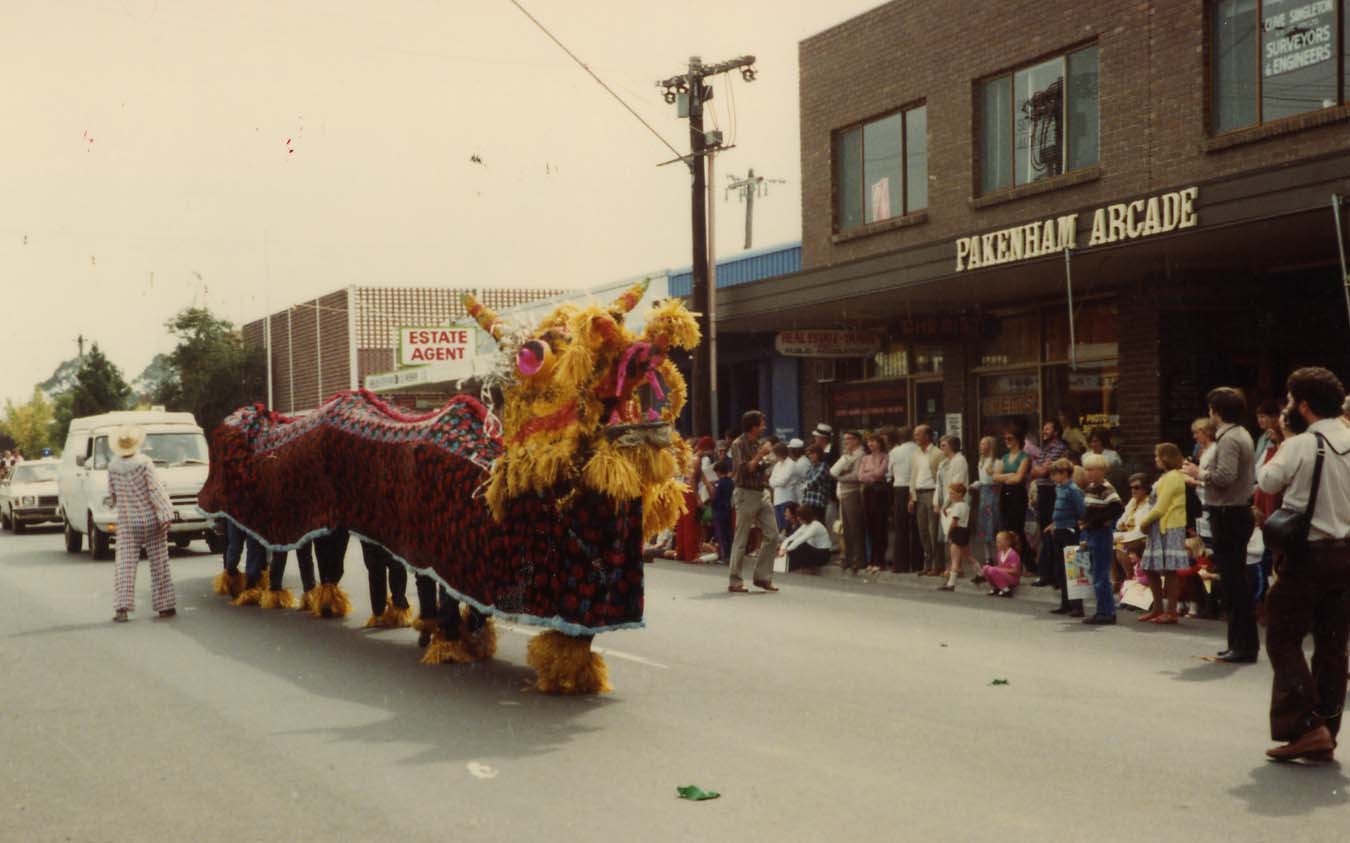
Here are some photographs of the Yakkerboo Festival in Pakenham taken in the late 1980s or early 1990s. The Yakkerboo Festival started in 1976, as light-hearted community Festival. These photographs are from the Library Archive and were taken by the Shire of Pakenham.

The Pakenham Shire float, looking down Main Street towards the railway line. The Pakenham Hotel, built in 1928-29, is on the right. The roof of Hardy's Hardware store can be seen in the centre.


The Pakenham Kindergarten float, with the particularly unattractive Shire Offices behind. The modern facade on the 1912 Shire Offices was erected in 1962.

Above and below, views of floats passing the State Bank in Main Street, obviously taken at different times as the State Bank logo is different.


Another view of theYakkerboo Parade, this time on the corner of Main street and John Street.

Friday, 16 September 2011

Antiques Appraisal Day Saturday, September 24

Do you have a family heirloom at home and what to know what it might be worth? Is the cat's feeding dish that you got at a garage sale really Ming Dynasty china and worth more than your house?
Then bring the items along to the Narre Warren Library on Saturday, September 24 from 11.00am to 3.00pm as the Narre Warren and District Family History Group are holding an Antiques Appraisal Day. It costs $5.00 per item to be appraised and you can also purchase light refreshments. The experts are Vanessa Crew and Adam Truscott from The Collector at Murrumbeena and they appraise everything - china, glass, sculpture, furniture.
For more information go to the Narre Warren & District Family History Group website www.nwfhg.org.au or email treasurer@nwfhg.org.au or ring 5991 4499.